Considered one of the biggest disruptors in the filmmaking industry, virtual production has moved from a niche technique into a mainstream part of how movies, shows, and branded video content get made. The technology has advanced quickly over the past several years, and more directors, brands, and production companies are figuring out how to put it to use.
The goal of virtual production is to recreate what physical production has done for over a century, but with computer-generated imagery (CGI) standing in for real locations, sets, and backdrops.
From its long history to the software driving it today, understanding virtual production makes it clear why so many people in and outside of Hollywood are paying attention.
Though it has gone by different names over the years, virtual production is a combination of physical and digital media that blends CGI and visual effects in real time. It’s used most often in film, but its reach now extends into television, video games, and branded marketing content.
Digital filmmaking techniques make up a large portion of what audiences see in movies, TV, and advertising today. Digital production incorporates lighting, real-world photography, camera angles, and other elements to create visuals that appear fully three-dimensional.

Virtual production is the best way to capture scenes that would be difficult or impossible to film in a real-world setting. It removes the unpredictability of weather, travel, and location logistics by generating and displaying environments through computer software. It’s used across everything from animated projects to adding CGI to live-action film and television.
The film industry has come a long way since the earliest silent films of the late 19th century. You only need to look at the visuals in modern virtual production films like Avatar, The Martian, and Interstellar to see how far the technology has come.
Virtual production, sometimes called “virtual cinematography,” has roots going back decades. Looking at how it’s been used across some of film’s most memorable moments shows just how much ground it’s covered.
This is one of the earliest and most recognizable virtual production techniques. It uses a pre-filmed background projected onto a large screen to simulate distant footage behind actors filming in the foreground.

One of the most famous examples is the 1959 film North by Northwest, where Cary Grant’s character is chased by a plane using rear-projected footage. Other classic films that used the technique include Psycho (1960), Aliens (1986), Terminator 2: Judgment Day (1991), Pulp Fiction (1994), and Eyes Wide Shut (1999).
Rear projection is far less common today, but it’s still occasionally used in big-budget productions with modern equipment.orm of virtual production nowadays, it is still used on occasion in big-budget films with more advanced equipment.
Front projection works the opposite way: the image is projected onto a screen from the front rather than from behind it. The projector can be mounted on the floor, ceiling, or an adjacent wall.
The technique has its drawbacks, since people or objects between the screen and the projector can cast shadows and disrupt a shot. It was famously used in Superman: The Movie (1978) to capture Christopher Reeve’s flying scenes against changing backdrops.
Used in productions ranging from the original Star Wars trilogy to Titanic, Mary Poppins, and Indiana Jones, matte paintings are illustrated backdrops of cities, landscapes, and sets placed behind the actual filmed footage to simulate a location.
Other notable examples include the depiction of ancient Rome in Ben-Hur, the Fortress of Solitude in Superman: The Movie, and the world of Fantastica in The NeverEnding Story.
Rear and front projection were both limited by the flat, single-angle nature of a projected background. Directors couldn’t shift perspective without breaking the illusion.
That changed with the arrival of computer-generated imagery (CGI), which merges digitally created visual effects with filmed footage. CGI has since been used across thousands of movies, TV shows, commercials, and branded content.
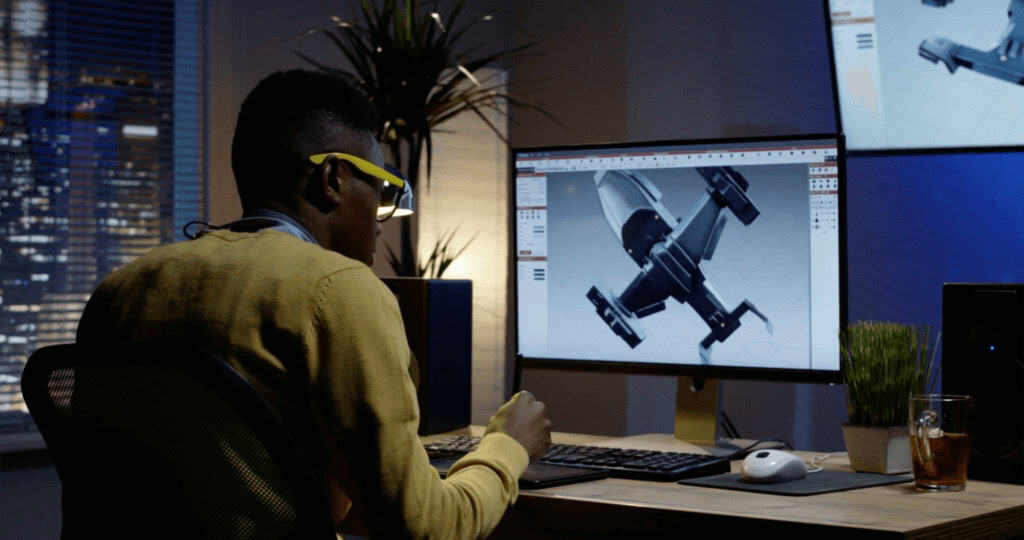
The first film widely credited with using CGI was the original Westworld (1973), which gave Yul Brynner’s robotic character a pixelated point-of-view effect. It kicked off a wave of adoption in films like Tron and Star Trek.
Other well-known CGI milestones include:
Digital production also introduced blue screen, and later green screen, technology, letting filmmakers replace the background with any environment they wanted. This gave directors far more flexibility with camera angles than projection-based methods allowed, and it’s the technique that put live actors into animated worlds like Michael Jordan in Space Jam.
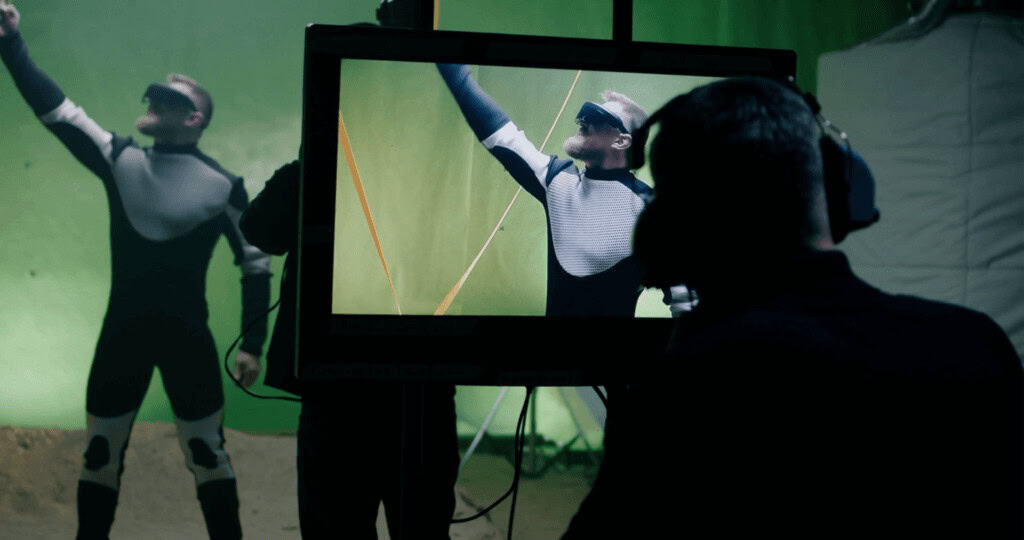
Background replacement has also been used frequently in Star Wars movies as well as other popular flicks like Sin City, Guillermo del Toro’s Pan’s Labyrinth, many of the Marvel films, and even as a backdrop in Ben Affleck’s Gone Girl. A more simple version of it is seen when you consider weather reports on local news stations.
The name most associated with virtual production today is Unreal Engine, whose Virtual Production Field Guide has become an industry reference point.
Technology built for gaming has crossed over into filmmaking, and real-time engines can now render photo-realistic environments live on set. Instead of relying on green screen and background replacement in post-production, modern virtual production uses high-resolution LED walls that display fully rendered digital environments in real time. Actors, directors, and crew see and adjust the scenery live, on set, as they shoot.
With LED volumes, the entire environment can be controlled, including weather, time of day, and camera perspective. Because lens and camera position data streams directly into the rendering engine, the background shifts naturally with camera movement to keep depth and scale accurate.
Jon Favreau helped bring the technology into the mainstream with Disney’s The Mandalorian, and it’s since been used to create the light-speed sequences in Solo: A Star Wars Story, portions of the photorealistic The Lion King remake (2019), and the 1970s London setting in Cruella.
Virtual production has moved well past its early experimental phase and continues to gain adoption as more studios and production companies build it into their workflows.
There are several reasons virtual production has become such a significant part of modern filmmaking and video content creation.
With LED volumes and real-time rendering, directors no longer have to wait for ideal weather or lighting conditions. A scene can be built and adjusted entirely through software, whether it calls for a snowy mountain backdrop or a clear desert landscape.
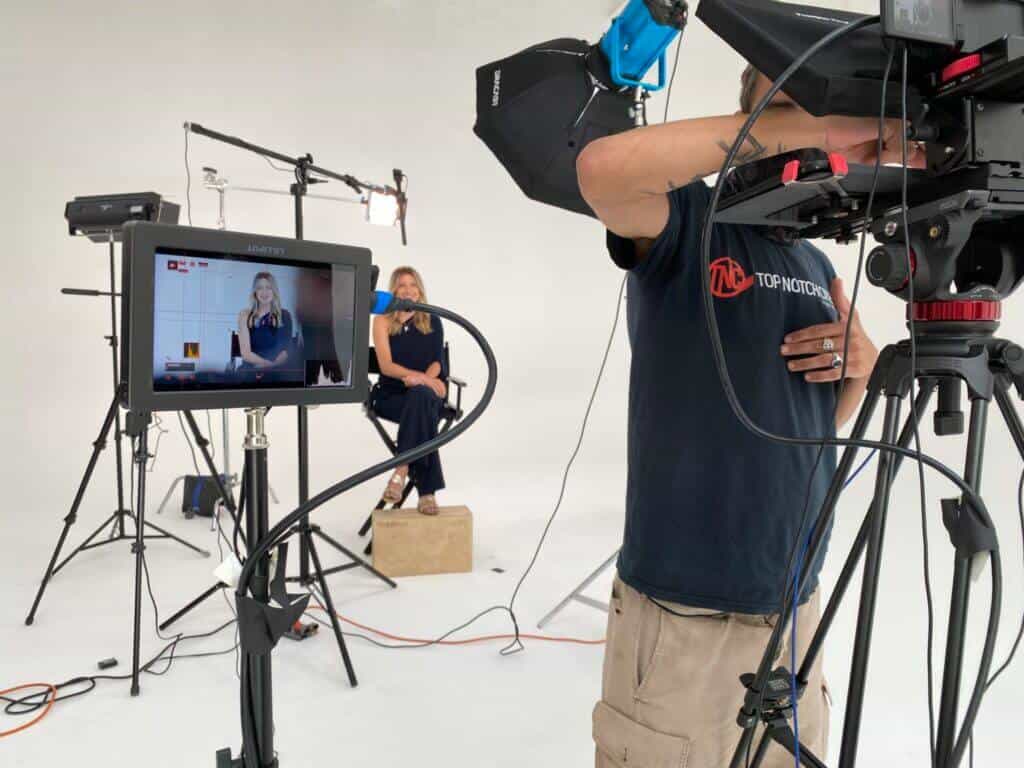
Rebuilding a physical set for reshoots used to mean recreating it from scratch. With virtual production, a previous set can be pulled up in the software and displayed again almost instantly.
Because fewer physical sets need to be built, virtual production can convert time saved into real budget savings that can be redirected elsewhere in a project.
One of the more technical advantages of LED-based virtual production is that the background adjusts to match the camera’s perspective in 3D space, so elements like buildings, mountains, or trees move at realistic speeds relative to the camera.
Virtual production reduces how many people need to be physically present on set at once, making it easier for parts of a production team to work remotely while still contributing to the final result.
Virtual production continues to expand into industries beyond film and television. It’s increasingly part of the toolbox for video marketers, particularly those already using CGI and visual effects in branded content.
Virtual production techniques have been part of the video game industry since the early 2000s, with similar approaches tracing back to games like id Software’s Doom in the 1990s. Companies like Epic Games have pushed the technology further through titles like Fortnite.

Film, TV, and gaming aren’t the only industries benefiting. Businesses across a wide range of sectors now use virtual production techniques in their video content, including:
Alongside LED walls and real-time engines, AI-driven video tools are becoming part of the same virtual production toolkit, generating backgrounds, characters, and visual elements without a full physical or LED setup. It’s a faster, lower-cost way for businesses to get similar visual flexibility. TNC’s own AI Video service applies these same principles for brands that want CGI-driven content without a full virtual production build.
Virtual production has already reshaped how films, shows, and branded content get made, and its use continues to grow across industries. Whether you’re exploring CGI-driven visuals, LED-based production, or AI video tools, there’s likely a fit for your next project.